
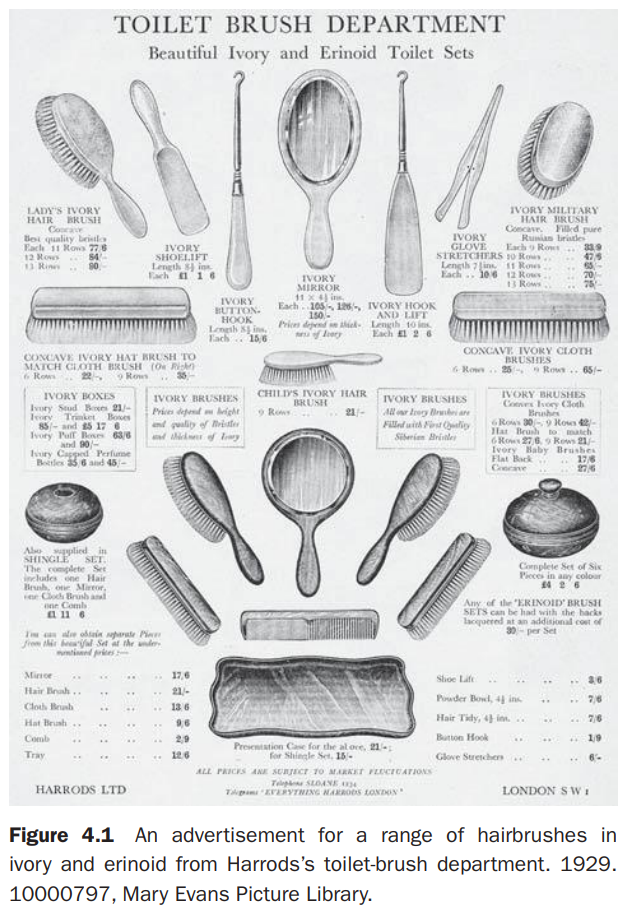
The Victorian era (1837-1901 CE) is one of the most well-known periods of human history, identifiable by its unique fashion, architecture, and culture. However, many artifacts from this time period have fallen into obscurity. Some visitors ask while touring the Havilah Beardsley House, “What is this thing,” or “What was that for?” Perhaps one of the most common yet mystifying parts of the Victorian home was the lady’s toilet service on her vanity. While we can easily identify objects today such as combs and brushes, other implements like the hair receiver or glove stretchers are no longer part of today’s material culture.
To understand the purpose of these tools, we must first understand Victorian beauty conventions. One of the most important features of a woman of this period was her hair. An overall put-together appearance indicated respectability and a place among the high social classes, but the hair in particular was considered a woman’s “crowning glory.” A fashionable hairdo not only enhanced a lady’s beauty, but it also indicated her age, marital status, socioeconomic background, and even morality. For example, long, loose tresses were only appropriate for young girls. Once a girl reached marrying age, however, she was expected to don updos as a sign of respectability and maturity. Unkempt or unbound hair on a mature woman was thought to be a symbol of her loose morals, even signifying that she may be involved in sex work. Therefore, it was of the utmost importance that a woman maintain a respectable and carefully crafted image.
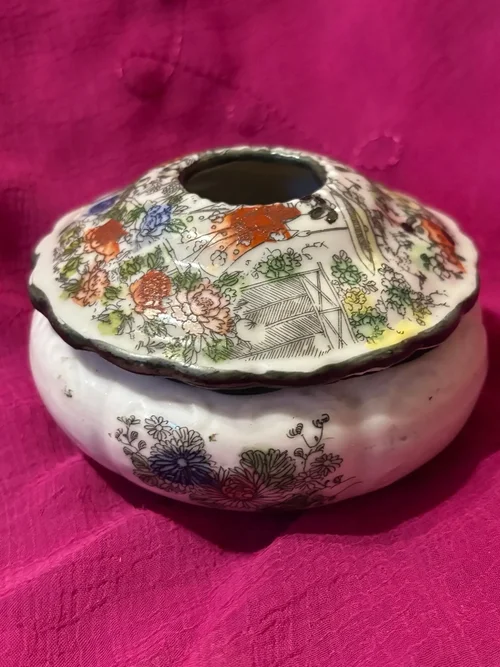
Hair Receiver
Because of this emphasis on luscious (yet tamed) locks, many of the objects in a vanity set focused on haircare. According to researcher and author Mimi Matthews, “Victorian ladies were advised to possess themselves – at the minimum – of at least three combs made of tortoiseshell with blunt teeth of varying widths; a ‘hard or penetrating brush’ to clean the roots of the hair after combing; and a brush made of ‘very fine hairs’ or ‘fine rice roots’ which was used to smooth the hair.” Since shampooing as we know it today was not part of haircare in the Victorian era, vigorous and prolonged brushing was prescribed to clean and soften the hair. An 1889 issue of Good Housekeeping gives us insight into these regiments, as it instructed ladies to:
“Brush the head twice each day with a bristle-brush, not too stiff, but sufficiently so to penetrate the scalp. Brush “every which way,” – forward, backward, up, down and sideways. This process will invigorate and soften the hair. Fifteen minutes twice a day devote to it if you have the time.”
Other magazines and periodicals advise varying amounts of time for brushing. Either way, one can see how the myth of “one hundred strokes” to the hair a day was born from this period.
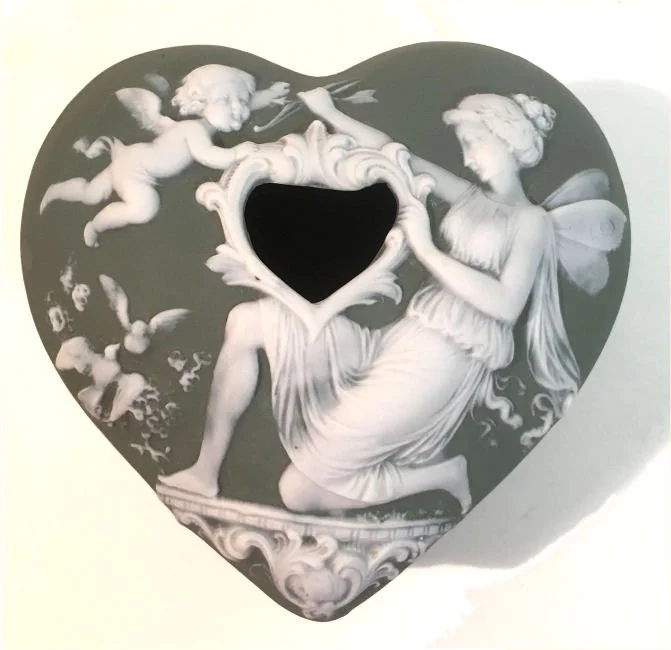
Heart-Shaped Hair Receiver
Other basic items in a vanity set include a mirror, trays, clothing and hat brushes, glove stretchers, various jars, and a hair receiver. While the purpose of many of these objects are self-explanatory, the latter is a mystery to most people today. The hair receiver is a small container with a hole in the lid that was used to store shed hairs for later repurposing. From their sheddings, women would craft ratts, which were rolls or balls of hair that provided volume and shape to an updo. Collected hair could also be used to stuff small objects, such as pincushions and pillows. While the need for hair receivers began to decline in the 1920s due to the bob and looser beauty restrictions coming into fashion, they continued to be used well into the 1950s. Many were simply round, but some were fashioned into more complex forms, such as hearts, animals, and irregular shapes, or were affixed with legs or pedestals. They often also bore symbols of femininity and flirtation like flowers, ribbons, lace, musical instruments, and goddesses.
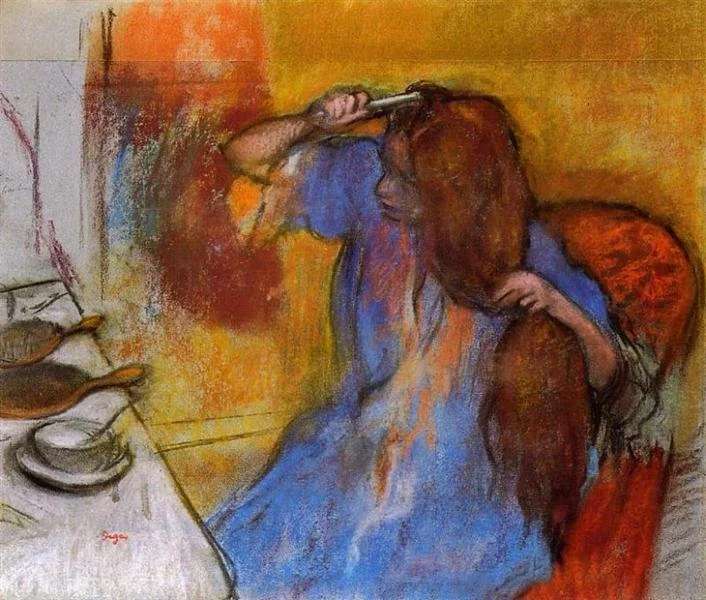
Woman Brushing Her Hair, Edgar Degas ca. 1889
While modern readers may be puzzled by the flirtatious aspect of these containers, Victorians were well aware of the symbolism of hair and, especially, hairbrushing. This was done only in the privacy of the bedroom, the one place where a respectable woman was quite literally allowed to let her hair down. Because of its setting, along with the association of loose hair with sexuality, hairbrushing was considered a sensual act. This is juxtaposed to the meaning given to vanity sets when received by a young woman. Most Victorian brides were gifted these toilet services on their wedding day, identifying them as married women. Even the material and design of these objects played a role in a woman’s identity as it allowed for her to display (or feign) her place in the middle class. While the vanity set may have marked the honorable, morally-upright Victorian woman, so too did it signify her sexual maturity and sensual nature.
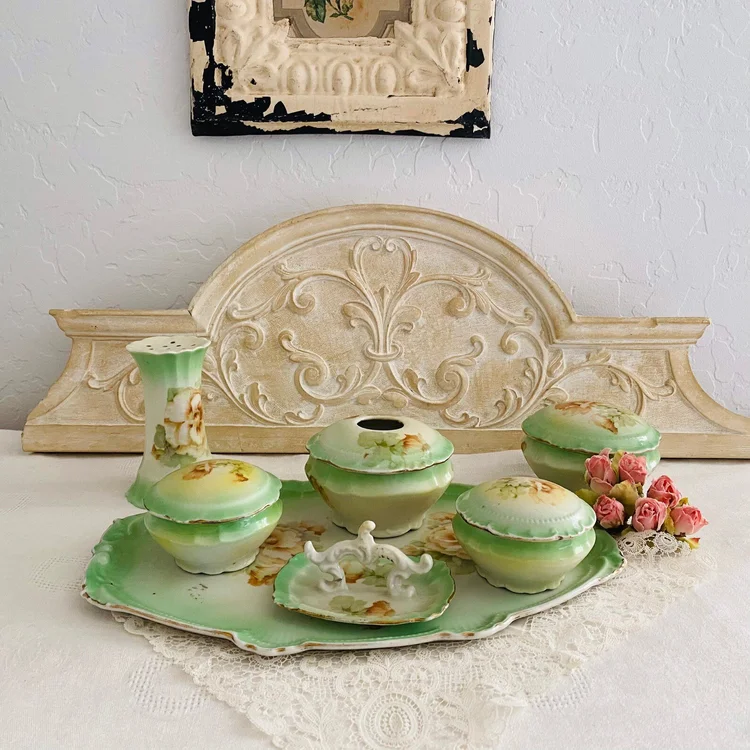
Edwardian Vanity Set
Most vanity sets were made of porcelain or ceramic, though glass, silver, ivory, and tortoiseshell were common. Later on, they would be made from early forms of plastic such as erinoid or celluloid and fashioned to imitate more expensive materials. Like hair receivers, vanity sets as a whole began to decline in popularity in the 20th century, though you may still catch a glimpse of them on some grandmothers’ boudoirs today. Be sure to stop in to Havilah Beardsley House to see some of our lovely toilet services and more accoutrements of everyday Victorian life.