
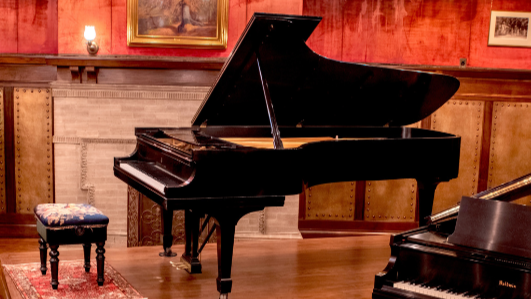
Ruthmere’s Steinway
Often we talk about Ruthmere’s Steinway piano and how it has been played by Arthur Rubinstein, one of the most notable pianists of the 20th century. What we don’t typically know is how this piano connects us to many different musical scenes and notable people around the world going back to the early 1900s. We might predict that this piano can connect us to many great musicians and composers of the past, but what if I told you that this piano provides an imaginary glimpse into royalty of many different countries including British King Edward VIII? And why stop at royalty and musicians? This piano provides connections to people across 6 continents as well as world famous people such as Picasso, H.G. Wells, Einstein and Hollywood Stars like Gregory Peck and Charles Boyer to name a few.
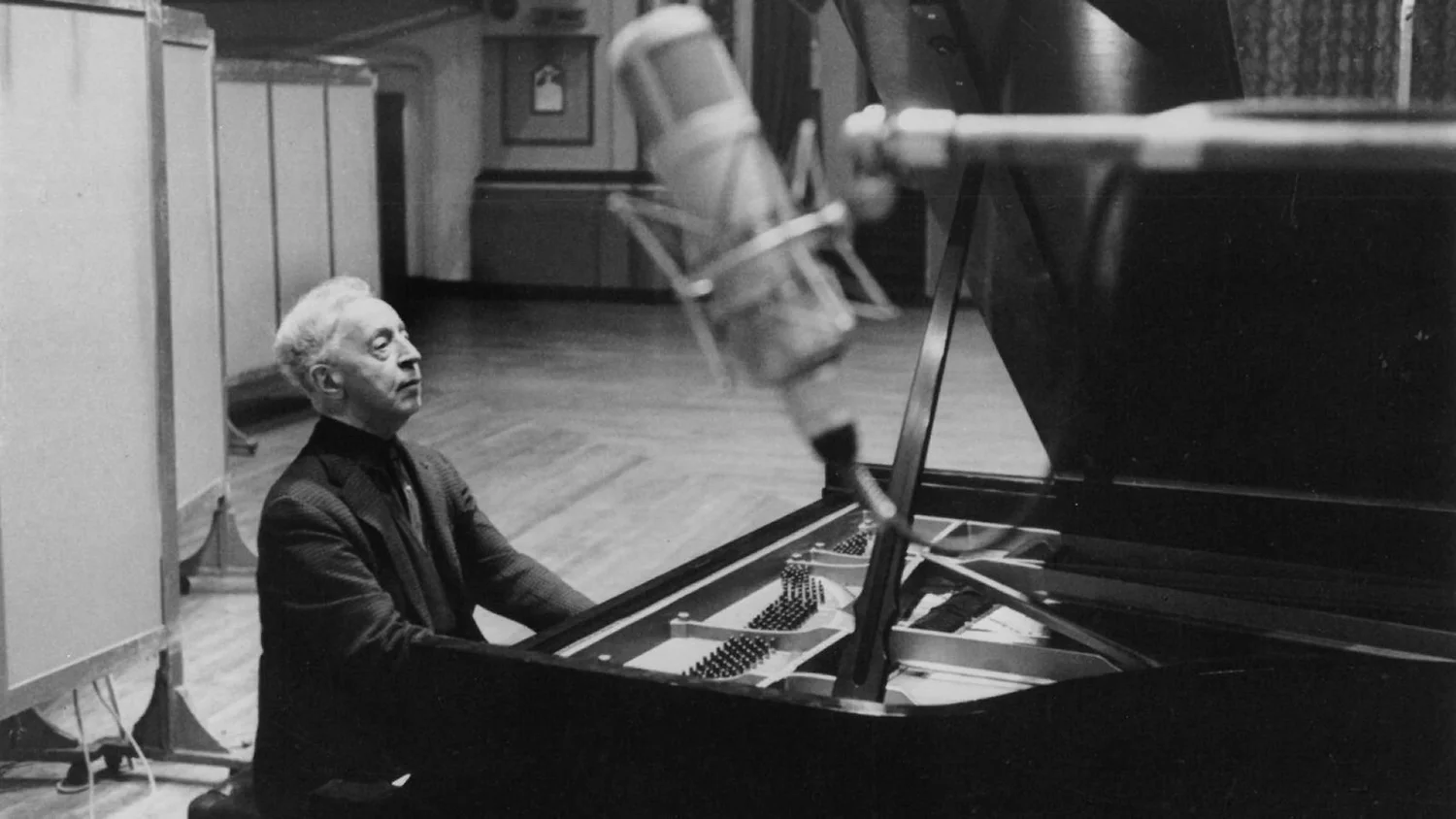
Rubinstein playing on a Steinway (image from https://www.steinway.com/artists/arthur-rubinstein)
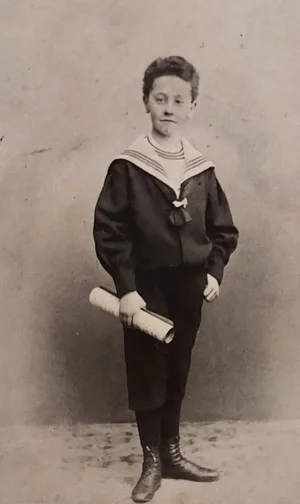
Rubinstein, age 13
Let’s start our imaginary travels in France where Rubinstein first started his musical career. It began in Paris in 1904 where he met Ravel and Saint-Saens among many other musicians, composers, opera singers, dancers and writers. The rotunda at the Societe Musicale was a rendezvous point for artistic people to have discussions, read music and gain the attention of the impresario Gabriel Astruc in hopes to start or further their career. Ravel was a little known composer at the time and liked to play piano pieces with Rubinstein. Rubinstein got to know music of different composers through this and Ravel, later name a master orchestrator of composers, got exposure as a composer. It was here that Rubinstein met a Spanish composer Isaac Albeniz several times, but didn’t know his name. Years later when Rubinstein was given a copy of Albeniz’s Iberia to play after the composer’s death, he realized he was the jovial Spaniard from the Societe Musicale. Iberia became a staple in Rubinstein’s repertoire for decades to come.
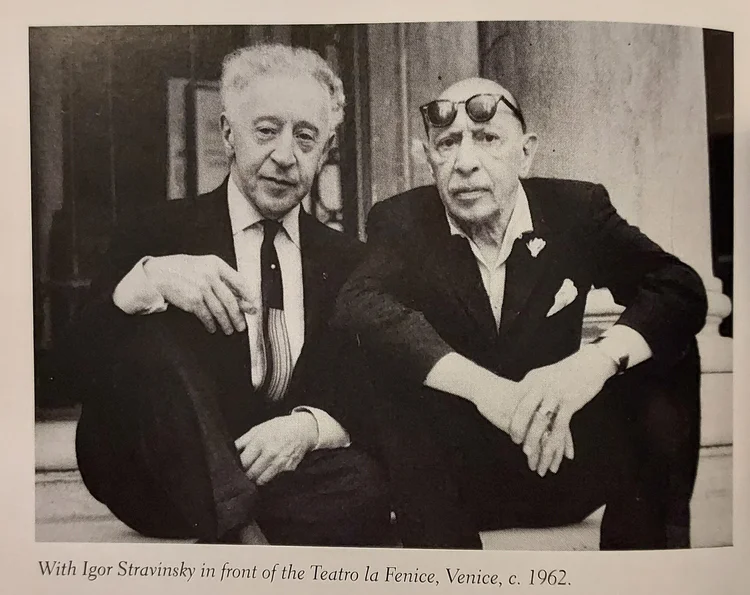
Rubinstein with Stravinsky ca. 1962
Next, we travel to London at the beginning of World War I. Rubinstein saw a performance of Stravinsky’s Petrouchka and was able to meet the composer for the first time and wanted to talk about his earlier work, The Rite of Spring. Rubinstein had a great ability to understand the composer's inspiration and meaning behind their music. In the past, when The Rite of Spring premiered, it was so different and controversial that there were riots. Rubinstein himself, though interested in what he heard, also described needing a break from the “noise” of this piece. Rubinstein and Stravinsky’s mutual understanding of The Rite of Spring was the beginning of a great friendship between the two musicians. Of course, all friendships can have their rough spots. Stravinsky and Rubinstein fundamentally disagreed on the piano’s purpose as an instrument. Stravinsky thought the piano was nothing more than a percussion instrument while Rubinstein thought it should be played with a wonderful, singing tone. This caused many arguments throughout their lifelong friendship, but it endured. Rubinstein helped Stravinsky while in dire financial need and in turn, Stravinsky wrote his first piano piece and dedicated it to Rubinstein. Rubinstein also helped mold Stravinky’s career to be more profitable by encouraging him to perform concerts of his music instead of just composing. Stravinsky also wrote a sonata from the material of his ballet Petrouchka which became another mainstay in Rubinstein’s repertoire.
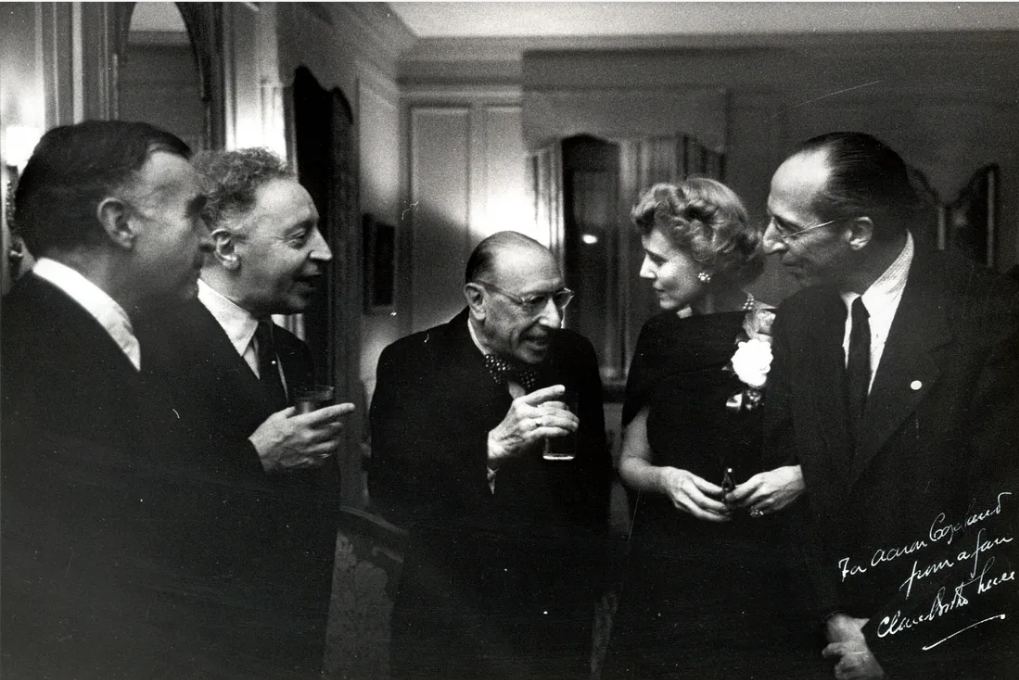
Carlos Chávez, Arthur Rubinstein, Igor Stravinsky, Claire Booth Luce, and Aaron Copland, 1950 (Library of Congress)
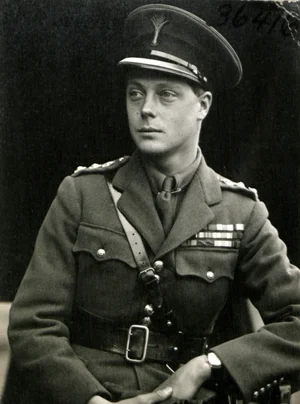
King Edward VIII, later the Duke of Windsor after abdicating the throne
Rubinstein was a great lover of literature. In his younger years, he spent a lot of time reading and not as much time practicing and in the second half of his life, he spent much more time practicing than reading. Rubinstein talked all the time about many books that he read and collected throughout his autobiographies. As we are already in Britain through imagination, we meet H.G. Wells. Rubinstein had met him several times and they were friends. They had great discussions of politics, general attitudes toward music and how music impacts the individual. One time, Wells woke Rubinstein up on a train to say hi. Seeing that Rubinstein was in no state to talk, H.G. Wells told Rubinstein he would always find a friend when knocking on Wells’ door in London.
Britain also provides a meeting of the Duke of Windsor, otherwise known as King Edward VIII, who abdicated the throne. Rubinstein was invited to a dinner with the Duke and also gave a private concert. He expected to meet a very proper and unmusical Englishman but was surprised that he was very cosmopolitan and possessed a great love of life and sense of humor. The Prince freely admitted that he knew nothing about music, but they had great conversations with Rubinstein’s stories and the Prince’s love of laughter. On another occasion, Rubinstein was invited back to St. James’s Palace where the Prince asked Rubinstein to play on a very old piano that was built for the wedding of Queen Victoria. As he started to play, the piano collapsed and the Prince laughed the hardest that Rubinstein had heard. This became a running joke between Rubinstein as the Prince would greet Rubinstein every time with “have you broken any pianos recently?” Rubinstein was also invited to attend the King’s last party before he abdicated. Mrs. Simpson and Winston Churchill were also in attendance and Rubinstein had an amusing argument with Churchill about how to address different people from many different countries instead of just the few larger countries. Abdication was soon after this party and Rubinstein met the Duke and Duchess several times afterward.
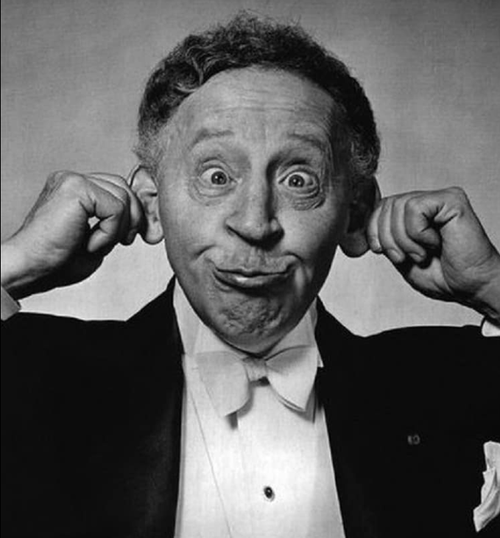
Rubinstein, ca. 1972
Rubinstein was not just a great pianist. He was extremely extroverted, easy to get along with and a great storyteller with a sense of humor. All these attributes complemented each other to create a successful, world-renowned personality who knew other world leaders and celebrities. Next time, we will continue our imaginary travels through Ruthmere’s Steinway piano to Spain and the Americas.